Tire Rotation FAQ's
Yes — the direction of rotation matters, especially if your vehicle is equipped with directional tires.
- Directional tires are designed with a tread pattern that performs best when rotating in only one direction. This design helps channel water away to resist hydroplaning and provides maximum traction. If directional tires are mounted incorrectly or rotated side-to-side, they can lose these safety and performance benefits. In most cases, directional tires can only be rotated front-to-back on the same side of the vehicle
- Non-directional tires, on the other hand, can be rotated using several patterns. Common methods include front-to-rear, forward cross, rearward cross, or even an X-pattern rotation, depending on whether the vehicle is front-, rear-, or all-wheel drive
👉 Always follow your manufacturer’s recommended rotation pattern and interval to ensure even wear, maintain traction, extend tire life, and keep your ride comfortable. If you’re unsure, a certified technician can identify your tire type and determine the proper rotation method.
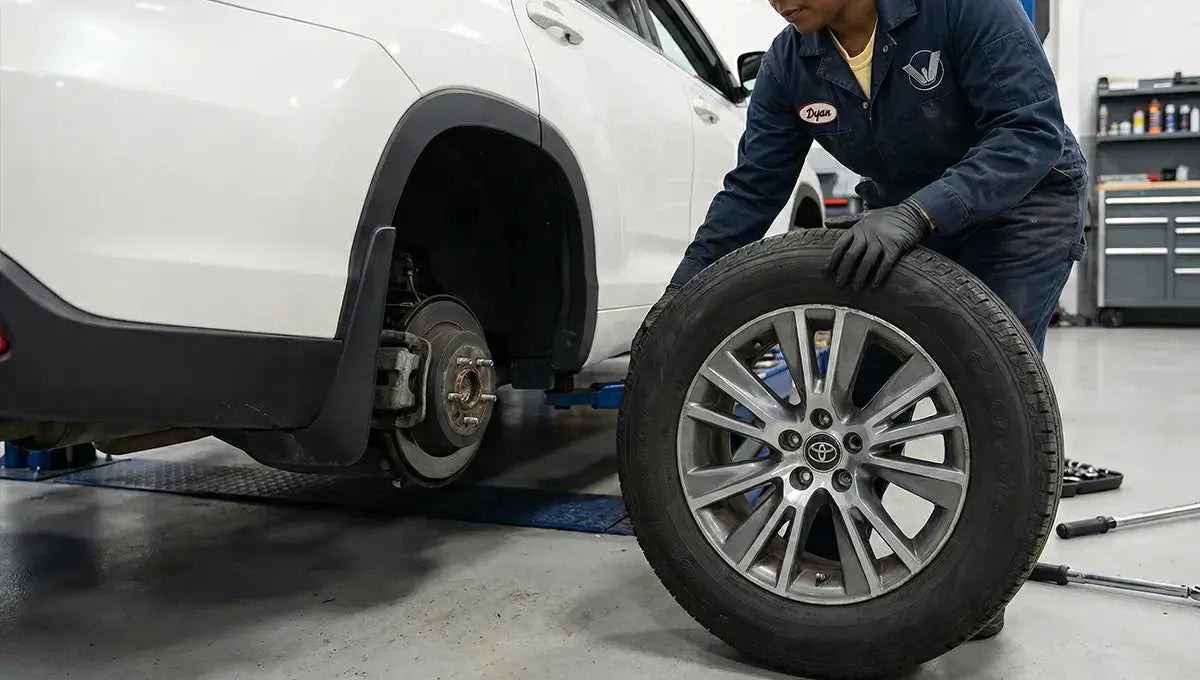
The correct tire rotation pattern depends on your vehicle type, tire size, whether your tires are directional, and your manufacturer’s recommendations. Below are the most common rotation methods used by certified technicians:
- Front to Rear: Move the front tires straight to the back and the rear tires straight to the front. A simple pattern that works for most vehicles with non-directional tires
- Forward Cross: The front tires move straight back, while the rear tires move forward and switch sides. This pattern is often recommended for front-wheel-drive vehicles
- Rearward Cross: The rear tires move straight forward, while the front tires move back and switch sides. Commonly used for rear-wheel-drive vehicles
- X-Pattern: All four tires are moved diagonally — each tire crosses from one axle to the opposite side. Frequently used for all-wheel-drive and 4-wheel-drive vehicles
👉 Pro Tip: If your tires are directional (designed to rotate only one way) or your vehicle uses staggered tire sizes (different sizes in the front vs. back), your technician will follow a specialized pattern or limit rotations front-to-back only.
Always check your owner’s manual for the manufacturer’s recommended rotation pattern and interval, or ask a certified technician to determine the best approach for your vehicle.
Watch for these signs while driving or checking your tires:
- Uneven wear between front and back tires – front tires often wear faster due to steering and braking, but noticeable differences may mean it’s time for a rotation
- Vibration in the steering wheel at highway speeds – this could point to wheel misalignment, unbalanced tires, or uneven wear that a rotation may help correct
- One tire losing pressure faster than the others – this might be a puncture or valve issue. If so, a rotation alone won’t solve the problem, and repair or replacement may be needed
If you notice any of these issues, have a certified technician inspect your tires and alignment. They’ll determine whether a simple rotation is enough or if balancing, alignment, or repair is the better solution.
Tire rotation is generally recommended every 5,000–7,500 miles, or about as often as you have your oil changed. Rotating your tires at these intervals helps promote even tread wear, extend tire life, and maintain consistent performance.
Since recommendations can vary by vehicle and tire type, always check your owner’s manual for the manufacturer’s guidance. If you’re unsure, ask a certified automotive technician near you — they can confirm the best rotation schedule based on your driving habits and vehicle needs.
Having your tires rotated regularly by a certified technician helps you get the most out of your investment. Tire rotations may:
- Extend tread life so your tires last longer
- Promote even wear across all four tires
- Improve fuel efficiency by reducing rolling resistance
- Maintain consistent performance for safer handling and braking
- Provide a smoother, more comfortable ride
Stay on schedule with your rotations to maximize tire longevity and overall vehicle performance.


Come Visit
Our 2 locations
At the Boardwalk or Sherwood Lakes
Sherwood Lakes
Princess Anne Rd
Virginia Beach, VA 23456
Boardwalk
Virginia Beach, VA 23451